
.png)
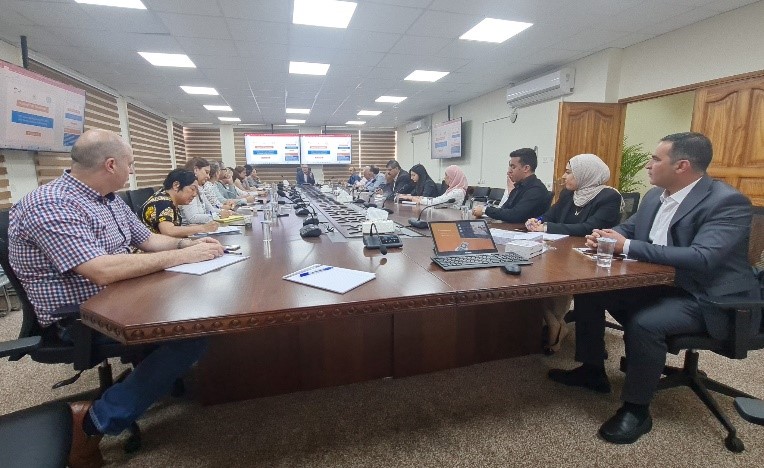
During the meeting of the National TVET Commission with partners Jweiles: Committed to improving the vocational and technical education and training system
During the meeting of the National TVET Commission with partners Jweiles: Committed to improving the vocational and technical education and training system Ramallah: 8/6/2023 Dr. Ziad Jweiles, President of the National TVET Commission, affirmed that the Commission is determined to succeed with the support of the government and donors, to achieve its goals of enhancing the vocational and technical education and training system in Palestine, and increasing the number of enrollees in it, whether in secondary or higher education. This came during the first meeting of the thematic working groups (strategic priorities for the vocational and technical education and training sector, and sectoral skills councils), as this meeting is part of a series of meetings that will be organized. In his opening speech, Dr. Jweiles emphasized the importance of the meeting, which focuses on discussing specialized and focused topics that delve into the details and components of the work system. He considered this meeting an important part of strengthening the institutional work and supporting and empowering the Commission to fulfill its entrusted role in improving and sustainably developing the sector. Dr. Jweiles stressed that the establishment of the Commission came to be the national policy, regulatory, and oversight reference for the sector, and to enhance the quality of its outputs, and to build an integrated vocational and technical education and training system characterized by efficiency, effectiveness, and flexibility. Dr. Jweiles commended the role of all partners in supporting the vocational and technical education and training system, and welcomed all attendees representing official institutions, civil society organizations, and donors. On his part, Eng. Hamadallah Saber from the Commission discussed the thematic working group on strategic priorities for the vocational and technical education and training sector, and presented innovative ideas on topics related to renewable energy, continuous vocational education and training, and greening vocational and technical education and training. Everyone agreed on the necessity of conducting a national study to determine the priorities in skills related to renewable energy. Dr. Emad Salem, from the Commission, discussed with the working group related to sectoral skills councils, and reviewed the importance of forming these councils and their role in enhancing partnership with the private sector, as well as with educational and training service providers. The groundbreaking experience currently being implemented in cooperation with the German agency and the German Cooperation Foundation (GIZ) was reviewed, and everyone agreed to proceed with implementing this initiative and drawing lessons and results from it. Dr. Lily Feidy, the President's Advisor for International Relations from the Commission, emphasized the need to complete the work of the two working groups for technical meetings, and to develop an action plan and recommendations for implementation.